
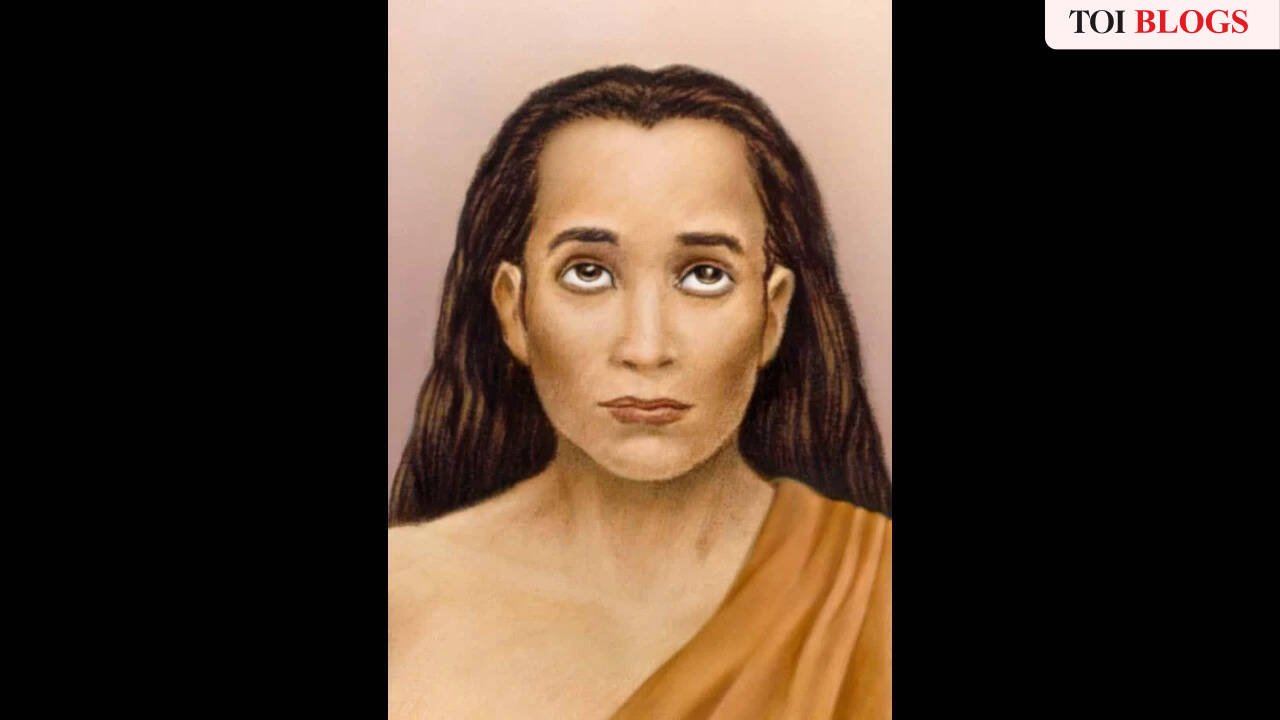
Mahavatar Babaji: The Himalayan master behind India’s spiritual renaissance
Hanuman Ansh, the recent spiritual movie on Neem Karoli Baba made on a modest budget of Rs 2 crore, has crossed over Rs 400 crore worldwide since its release on August 7, emerging as one of 2026’s biggest Hindi grossers. The numbers tell a story larger than cinema: Indian audiences are not merely willing to watch meaningful content about our spiritual and mystical inheritance; they are hungry for it.This spiritual quest does not exist in isolation. The world is moving from a unipolar to a multipolar order on many fronts at once. Its grosser expressions are visible in finance, trade and geopolitics, but its subtler manifestation lies in the cultural and spiritual realm, where civilisations that regain their confidence begin to reclaim their ideas.In the process, we are rediscovering the rishis, sages and saints who were scientists of consciousness long before the modern laboratory existed.The Householder Yogi What makes Neem Karoli Baba so resonant today is that he was no remote renunciant. Married young, he left home to seek God but later returned at his father’s request to live as a householder. Even while raising a family, he became one of the most revered saints of the 20th century, with an influence that travelled from Kainchi Dham to Silicon Valley. To everyone juggling careers, finances and family, his life carries a simple assurance: one need not renounce the world to realise the divine. Indian tradition is rich with such examples. Guru Nanak Dev Ji, a family man, taught that the divine is realised through honest work, remembrance of God and sharing with others. Sant Kabir found God at his weaver’s loom, while Sri Ramakrishna Paramhansa pursued his sadhana alongside Sarada Devi. And the Kriya Yoga tradition gave us two towering householders: Lahiri Mahasaya, the Varanasi accountant who became a Yogavatar, and Sri Yukteswar Giri, who lived as a married man before taking monastic vows. Yet behind this lineage, and behind a guru-shishya parampara that now spans continents, stands one enigmatic figure who seldom stepped into public view: Mahavatar Babaji.The Deathless Guru Almost everything the world knows about Babaji comes from Paramahansa Yogananda’s ‘Autobiography of a Yogi’, among the most influential spiritual books ever written. Yogananda describes Babaji as a deathless, everyouthful master who has lived for centuries in the Himalayas, revealing himself only to a chosen few. Lahiri Mahasaya often told his disciples that whoever utters Babaji’s name with reverence draws his instant blessing. Broadly, Babaji’s contribution to the world can be understood in three strands.First, the revival of Kriya Yoga. In the fourth chapter of Bhagavad Gita, Krishna speaks about the efficacy of the Kriya technique through which one offers the inhaling breath into the outgoing and the outgoing into the incoming, bringing the breath under control before transcending it. According to Yogananda, Babaji described the Kriya Yoga he was giving the world in the 19th century as a revival of this very science, taught by Krishna to Arjuna and later known to Patanjali, but lost during the dark ages of materialism.Kriya is a scientific technique of pranayama and meditation that, practised with devotion, is said to accelerate the soul’s evolution.Second, the rebalancing of East and West. At the 1894 Kumbh Mela in Allahabad, Babaji met Sri Yukteswar and shared a vision that feels strikingly contemporary. The West, he observed, was advanced in material and scientific achievement but spiritually impoverished; India held the universal methods of inner realisation but had neglected material progress. Each had much to learn from the other, and humanity needed a golden middle path combining the spiritual and the practical. He asked Sri Yukteswar to write a book on the underlying harmony of Hindu and Christian scriptures, which condensed into the book ‘The Holy Science’ and promised to send him a disciple to be trained for spreading yoga in the West. That disciple was Paramahansa Yogananda, and in 1920, just before he sailed for America, Babaji appeared to him in Kolkata to assure him that he had been chosen for this mission. Yogananda went on to bring Kriya Yoga to millions in the West, and his autobiography still draws seekers worldwide.Third, the guru-shishya parampara. Babaji did not merely hand out a technique; he established a living lineage that runs from him through Lahiri Mahasaya, Sri Yukteswar and Yogananda, and branches out through Lahiri Mahasaya’s many other disciples, so that any earnest seeker can find guidance. The path demands discipline yet welcomes all: sincerity, steady practice and devotion to the guru.Yogananda also writes that Babaji gave yoga initiation to Adi Shankaracharya, founder of the Dashanami order of swamis, and to the medieval saint Kabir. These accounts rest on the lineage’s testimony and show that Babaji has quietly guided India’s spiritual life for centuries.The story that most defines Babaji’s gift to the modern world unfolds in the hills of Uttarakhand. In 1861, Shyama Charan Lahiri, a 33-year-old accountant in the British government’s Military Engineering Department, was unexpectedly transferred to the new army post at Ranikhet. Walking one afternoon near Dronagiri, above Dwarahat, he heard someonecall his name. Climbing higher, he met a radiant young ascetic who revealed that Lahiri had lived there in a previous life as his disciple. He then showed him the cave, blanket and water pot that had once been his, and as memories came flooding back, Lahiri recognised the ascetic as Babaji, his guru. That night, Babaji materialised a golden palace on the mountainside to fulfil a long-forgotten desire of his disciple. Inside it, Lahiri Mahasaya was initiated into Kriya Yoga, and by morning the palace had vanished. What followed changed spiritual history: Lahiri Mahasaya pleaded with Babaji to relax the ancient restrictions and allow Kriya to be given to all sincere seekers, including householders who could not renounce the world, and Babaji agreed. Soon after, word came that the Ranikhet posting had been a clerical error; it had served its purpose. Lahiri Mahasaya returned to Varanasi to live as husband, father and office-goer, and to initiate thousands of seekers from every background. Today, pilgrims trek from Kukuchina, near Dwarahat, to the place revered as Babaji’s cave, and sit in silence in the same forests where an accountant from Bengal once found his guru.The Guru is ever waitingThe triumph of Hanuman Ansh is a reminder that India is remembering itself. The lives of Neem Karoli Baba, Lahiri Mahasaya and Sri Yukteswar tell us that the spiritual life is not a retreat from our responsibilities but a way of carrying them with greater clarity and love. Babaji opened that door for the householder, and the path is still there, the technique still being taught. As the world rebalances, let each of us rebalance within, steadfastly following the way these masters showed us.Just as Babaji called out to Lahiri Mahasaya on the slopes of Dronagiri, the guru is waiting for us too.
Disclaimer: Views expressed above are the author’s own.
